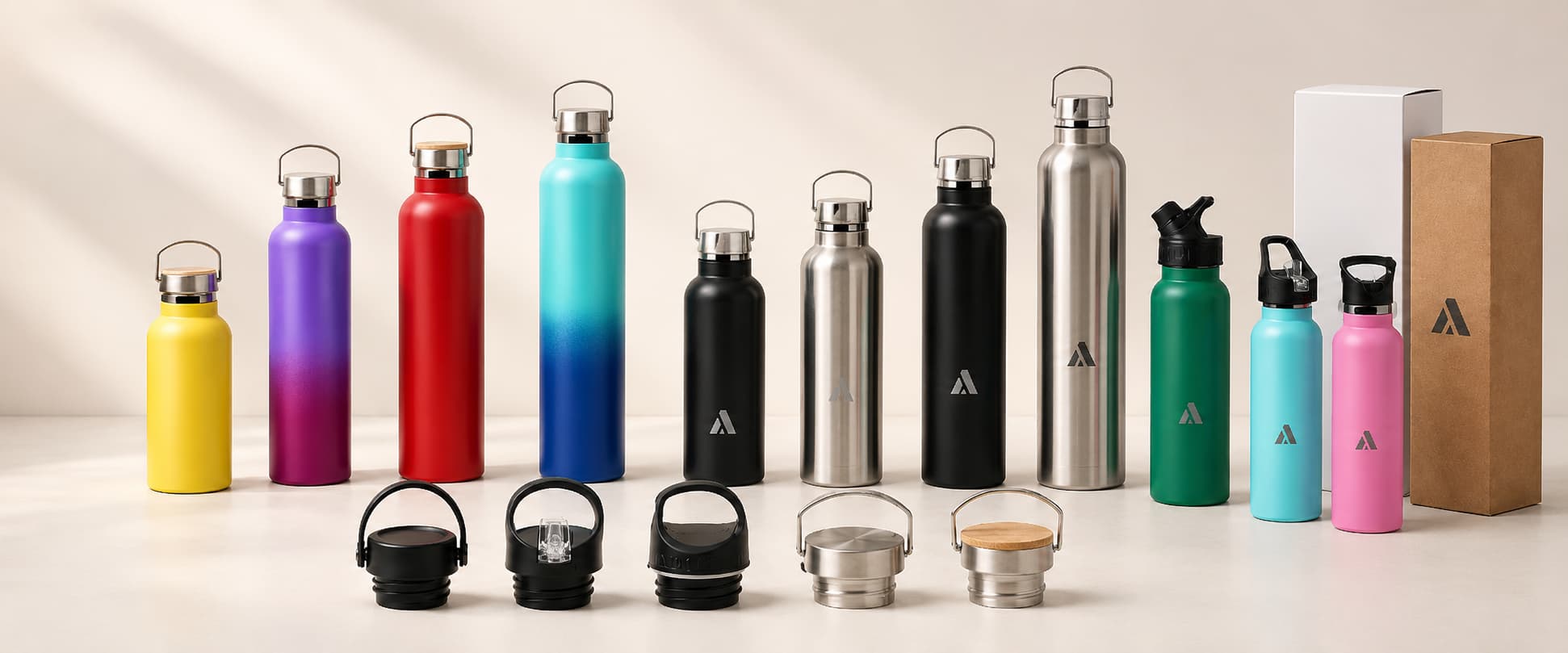
For custom stainless steel bottles, dishwasher safety is not only about the bottle itself. Buyers also need to consider the surface coating, logo process, printing adhesion, and real daily use conditions.
At YourBottle, we can support custom bottle projects that require professional dishwasher testing. With the right surface finish and upgraded logo process, our bottles can pass a 50-cycle laboratory dishwasher test, and a formal test report can be arranged when required.
However, we still recommend hand washing for long-term daily use, especially for bottles with custom logos, UV printing, patterns, or special coatings. Laboratory testing helps prove durability under standard conditions, but different household dishwashers may have different washing strength, detergent formulas, water temperature, and drying programs.
Can Custom Stainless Steel Bottles Pass Dishwasher Testing?
Yes. Custom stainless steel bottles can pass dishwasher testing if the correct surface material and logo process are used.
For projects that require a formal report, we can arrange professional laboratory testing for 50 dishwasher cycles. This type of test is more suitable for buyers who need proof for retail, brand approval, or internal quality control.
But buyers should understand one thing clearly: passing a laboratory test does not mean the bottle will stay perfect forever in every household dishwasher. Real use conditions are more difficult to control.
Powder Coating or Spray Painting: Which Is Better?
For most dishwasher-required bottle projects, powder coating is usually more stable than spray painting.
A dishwasher-resistant powder coating can provide better surface adhesion and stronger resistance during washing. It is also easier to support adhesion testing, such as cross-cut testing, when the correct powder material is used.
Spray painting can also be used for some projects, but regular paint is usually less suitable for repeated dishwasher cleaning. If the buyer requires dishwasher testing, we need to use a more durable paint system instead of normal spray paint.
In simple terms, if dishwasher durability is important, we usually recommend powder coating first.
Why Logos May Peel Even If the Coating Looks Fine
Many buyers think that if the coating is strong, the logo will also be strong. In fact, they are different.
The coating needs to bond with the stainless steel surface. The logo needs to bond with the coating surface. This means the logo has another layer of adhesion risk.
After repeated dishwasher washing, hot water, detergent, water pressure, and drying heat may affect the printed logo area. This is why some bottles may keep the coating, but the logo starts to peel or fade.
For custom logo bottles, dishwasher testing should always check both the coating and the logo.
Our Upgraded Process for Dishwasher-Required Projects
For buyers who need better dishwasher durability, we usually recommend this upgraded process:
- Use dishwasher-resistant powder coating or durable paint.
- Apply pre-treatment liquid before logo customisation.
- Oven-cure the bottle again after logo printing.
The pre-treatment liquid helps improve bonding between the logo and the coated surface. The second oven curing process helps make the printed logo more stable.
This process is especially useful for custom logos, UV printing, printed patterns, and brand artwork.
How We Test Before Bulk Production
Before mass production, we normally make a customised sample first.
After the coating and logo are finished, we test the sample through 5–6 dishwasher cycles. We check whether the logo peels, the coating lifts, or the printed area shows obvious damage.
If the sample passes our internal test, we can use the same process for bulk production.
For buyers who need stronger proof, we can arrange a professional 50-cycle laboratory dishwasher test. A formal test report can be provided when required.
What Buyers Should Confirm Before Ordering
Before starting a dishwasher-required project, buyers should confirm these points:
- Do you need internal sample testing or a third-party lab report?
- How many dishwasher cycles are required?
- Is the logo laser engraved, UV printed, screen printed, or heat transferred?
- Is the bottle powder-coated or spray-painted?
- Will the product be sold as dishwasher-safe?
- Do you need “hand wash recommended” on the packaging or manual?
These details help us choose the right coating and logo process before sampling.
Our Practical Recommendation
If the project only needs light daily use, regular powder coating and normal logo customisation may be enough.
If the product will be sold in the U.S. market or promoted as dishwasher-safe, we recommend using dishwasher-resistant powder coating, logo pre-treatment, and post-printing oven curing from the beginning.
If a formal dishwasher-safe claim is needed, we recommend arranging a professional 50-cycle laboratory dishwasher test and keeping the report for your quality files.
For long-term use, we still recommend hand washing customised stainless steel bottles whenever possible. Dishwasher-resistant does not mean the logo and coating will never wear off. It means the bottle has been tested under specific conditions and has better resistance than a regular custom bottle.
Final Thoughts
Dishwasher testing for custom stainless steel bottles should be discussed before sampling, not after mass production.
With the right coating, pre-treatment, logo process, and curing method, custom bottles can pass professional 50-cycle laboratory dishwasher testing. For bulk orders, sample testing before production also helps reduce the risk of logo peeling, coating damage, and customer complaints.
If your project needs dishwasher-resistant custom bottles, we can help you choose the right surface finish, test the sample, and arrange laboratory testing when needed.