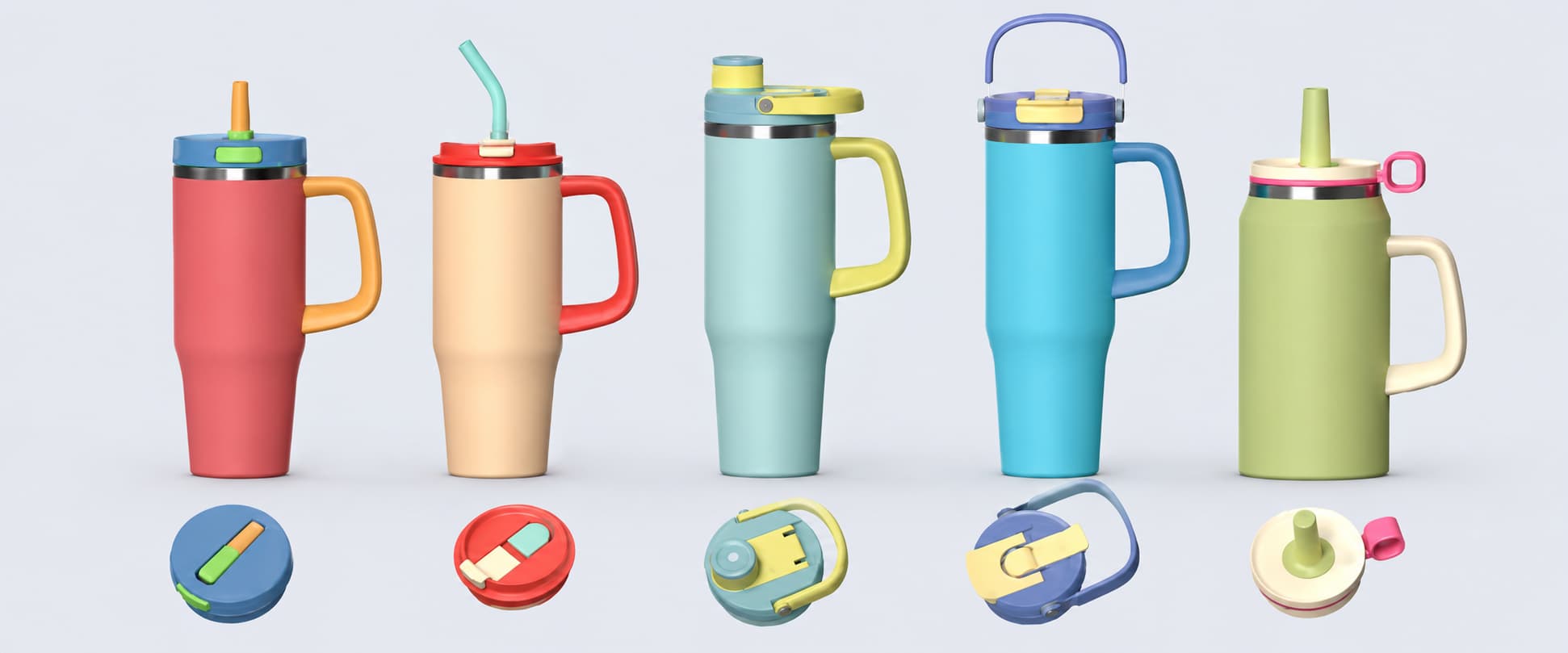
When importing stainless steel water bottles, tumblers, coffee cups, children’s bottles, or smart drinkware, certification requirements may vary by market, product structure, material, and sales channel.
Not every bottle needs every certificate. This guide provides importers with a simple overview of common compliance checks to consider before placing a bulk order.
Why Certification Requirements Differ by Market
Drinkware products may include several materials and components, such as stainless steel, plastic lids, silicone seals, straws, coatings, printed logos, packaging, or electronic parts.
Different markets may focus on different risks. For example, one country may pay more attention to food contact safety, while another may require chemical restriction checks, warning labels, electrical safety, or import conformity documents.
For stainless steel drinkware, buyers usually need to confirm:
- the destination country or sales region;
- whether the product is for adults or children;
- whether the cup includes plastic, silicone, coating, straw, or electronic parts;
- whether it will be sold through retail stores, supermarkets, Amazon, promotional gift channels, or e-commerce platforms;
- Whether the importer, retailer, or marketplace has its own testing requirements.
EU Market: Food Contact, REACH, LFGB and CE
For the EU market, stainless steel drinkware may involve food contact material testing, chemical restriction checks, and sometimes electronic safety requirements.
Food Contact Materials
Food contact testing is one of the main checks for drinkware sold in the EU.
For bottles and tumblers, the tested parts may include:
- stainless steel inner wall;
- plastic lid;
- silicone gasket;
- straw;
- drinking spout;
- coating or surface treatment;
- printed areas close to the drinking surface.
The primary purpose is to verify whether materials that come into contact with beverages are suitable for food-contact use. Testing may include overall migration, specific migration, heavy metals, and other material-related checks.
For buyers, it is important to remember that the stainless steel body and lid components may need to be checked separately. A cup with a different lid, straw, coating, or silicone seal may require different testing attention.
REACH
REACH is mainly related to chemical substances in products sold in the EU.
For stainless steel drinkware, REACH checks may focus on:
- plastic parts;
- silicone parts;
- coatings;
- paints;
- printed logos;
- surface treatment;
- Packaging materials when required.
The common concern is whether the product contains restricted substances or substances of very great concern, also known as SVHCs.
For importers, REACH is especially important when the drinkware has a coloured coating, a soft-touch finish, plastic accessories, rubber-like parts, or printed decoration.
LFGB for Germany
LFGB is commonly requested by buyers selling food contact products in Germany or German-speaking markets.
For drinkware, LFGB testing may include:
- sensory test;
- odour transfer;
- taste transfer;
- overall migration;
- specific migration;
- Material safety checks for plastic, silicone, coating, and metal parts.
The sensory test is one reason why LFGB is often stricter than a basic food contact check. For example, if a plastic lid or silicone seal gives an obvious smell or affects the taste of water, it may become a problem during testing.
LFGB is often requested for coffee cups, tumblers, children’s bottles, reusable drinkware, and retail drinkware products.
CE for Smart or Electronic Drinkware
CE is not usually required for ordinary stainless steel bottles without electronic functions.
However, CE may become relevant when the product includes electronic parts, such as:
- smart temperature display lid;
- rechargeable function;
- heating function;
- battery;
- electronic screen;
- USB charging structure.
In this case, the testing focus may include electrical safety, electromagnetic compatibility, battery safety, and related electronic product requirements.
For buyers, the key point is simple: Ordinary stainless steel drinkware and smart electronic drinkware should not be treated as the same product.
US Market: FDA Food Contact and California Proposition 65
For the US market, buyers often ask about FDA food contact compliance and California Proposition 65.
FDA Food Contact
For stainless steel bottles and tumblers, FDA-related checks usually focus on food contact materials.
The main parts may include:
- stainless steel inner surface;
- plastic lid;
- silicone seal;
- straw;
- drinking spout;
- coating;
- Parts that may touch beverages during normal use.
For importers, it is better to describe this as food contact compliance instead of simply saying “FDA certificate.” The testing focus depends on the material and product structure.
For example, a simple stainless steel tumbler, a sports bottle with a plastic straw lid, and a coffee cup with a sliding lid may involve different material checks.
California Proposition 65
California Proposition 65 is important for products sold in California or through retailers and platforms that require Prop 65 review.
For drinkware, the common concerns may include:
- lead;
- cadmium;
- BPA;
- phthalates;
- nickel or other listed substances when relevant;
- chemicals in coating, paint, plastic, silicone, or printed parts.
Prop 65 is not only about whether the product can be sold. It is also related to whether a warning label is required when exposure to listed chemicals may exceed certain levels.
For stainless steel drinkware importers, Prop 65 is especially worth checking when the product has a coloured coating, a painted surface, printed patterns, plastic lids, silicone parts, or children’s use scenarios.
Japan Market: Food Sanitation Law and PSE for Electronic Products
For Japan, drinkware buyers usually pay attention to food contact safety and material compliance.
Food Sanitation Law
For stainless steel bottles, tumblers, and food contact containers, the tested parts may include:
- metal inner wall;
- plastic lid;
- silicone seal;
- straw;
- coating;
- resin parts;
- Parts that directly or indirectly contact beverages.
The common testing focus may include:
- heavy metals;
- evaporation residue;
- material migration;
- safety of synthetic resin parts;
- Safety of coatings and sealing parts.
Japan has strict expectations for food contact products, especially when the product is used for daily drinking, children’s use, or retail sale.
PSE for Electronic Drinkware
PSE is not usually related to ordinary stainless steel bottles.
It may become relevant when the drinkware includes regulated electrical components, such as:
- heating function;
- charging function;
- rechargeable battery;
- power adapter;
- electronic control structure.
For smart bottles with only a simple temperature display lid, buyers should still confirm the actual electronic structure and local import requirements before testing.
Middle East Market: GCC, GSO and SASO Requirements
For Middle East markets, requirements may vary by destination country. Saudi Arabia, the UAE, Kuwait, Qatar, Bahrain, and Oman may have different import procedures and documentation requirements.
For drinkware products, importers may need to check:
- food contact material testing;
- product conformity documents;
- GCC or GSO-related standards;
- SASO requirements for Saudi Arabia;
- shipment inspection when required;
- Arabic labelling when required;
- country of origin marking;
- importer information;
- Packaging and customs documents.
For Saudi Arabia, SASO-related conformity documents may be requested depending on the product category and import process.
For buyers importing into the Middle East, the safest step is to confirm requirements with the local importer, customs agent, or conformity assessment body before mass production.
Australia and New Zealand Market: Food Contact and Material Safety
For Australia and New Zealand, stainless steel drinkware buyers usually focus on food contact safety and material safety.
The common attention points include:
- stainless steel material;
- plastic lid safety;
- silicone seal safety;
- BPA-free request;
- heavy metal checks;
- coating safety;
- Packaging and labelling information.
For products with plastic lids, straws, soft-touch coating, or children’s use, buyers may request additional testing or declarations from the supplier.
If the product is sold through retail channels, supermarkets, or brand distributors, the buyer may also have their own testing requirements beyond basic import needs.
Common Testing Focus for Stainless Steel Drinkware
Different certifications may use different standards, but many drinkware tests focus on similar product parts.
| Product Part | Common Testing Focus |
|---|---|
| Stainless steel inner wall | Heavy metals, material grade, food contact safety |
| Plastic lid | BPA, migration, odor, heat resistance |
| Silicone gasket | Migration, odor, food contact safety |
| Straw | Plastic safety, migration, drinking contact safety |
| Coating | Adhesion, heavy metals, restricted chemicals |
| Printed logo or pattern | Ink safety, abrasion, chemical restrictions |
| Drinking spout | Food contact safety, plastic or silicone material checks |
| Packaging | Recycling mark, warning label, barcode, country of origin |
| Electronic lid | Battery, EMC, electrical safety, market-specific electronic requirements |
For importers, this part is often more practical than only asking for a certificate name. The same certificate name may cover different test items depending on the product material and target market.
What Buyers Should Confirm Before Requesting Certification
Before arranging testing, buyers should prepare clear product and market information.
Important details include:
- target country or sales region;
- sales channel;
- product type;
- stainless steel grade;
- lid material;
- silicone material;
- coating type;
- printing method;
- whether the product is for adults or children;
- whether the product includes electronic parts;
- packaging style;
- label requirements;
- Required test standard from the importer, retailer, or marketplace.
This information helps avoid testing the wrong product, wrong material, or wrong standard.
For example, if the buyer only tests one lid type but later changes to another plastic lid, the previous report may not fully match the final product. If the buyer sells the product in both the EU and the US, one market’s test report may not be enough for the other market.
How Certification Support Usually Works
Certificates and test reports are not always universal for every product, material, market, or order.
For drinkware projects, the usual process is:
- confirm the destination market;
- confirm the product structure and materials;
- Check whether existing reports can match the product;
- confirm whether new third-party testing is needed;
- prepare samples for testing;
- Arrange testing based on the buyer’s required standard;
- Provide the final report or certification documents after testing is completed.
If buyers have specific certification requirements, testing can be arranged according to the product structure, order details, and target market.
FAQ About Drinkware Certification
Do all stainless steel bottles need the same certification?
No. Certification requirements depend on the destination country, product material, lid structure, sales channel, and whether the product includes electronic parts.
Is CE required for ordinary stainless steel bottles?
Usually not. CE is mainly relevant when the product includes electronic functions, such as smart temperature display, charging, heating, battery, or electronic control parts.
What is usually tested for food contact drinkware?
Common testing items include heavy metals, overall migration, specific migration, odor transfer, taste transfer, BPA, and safety checks for plastic, silicone, coating, and metal parts.
Can one certificate cover all markets?
Usually not. Different markets may require different standards, test methods, languages, warning labels, and documentation.
Does every order need new testing?
Not always. Some buyers may use existing reports if the product, material, and standard match their requirements. However, new testing may be needed when the product structure, material, lid, coating, or target market changes.
Can testing be arranged if our project needs a specific certificate?
Yes. If the buyer has a clear target market or required testing standard, testing can be arranged through a third-party laboratory based on the product structure and order requirements.