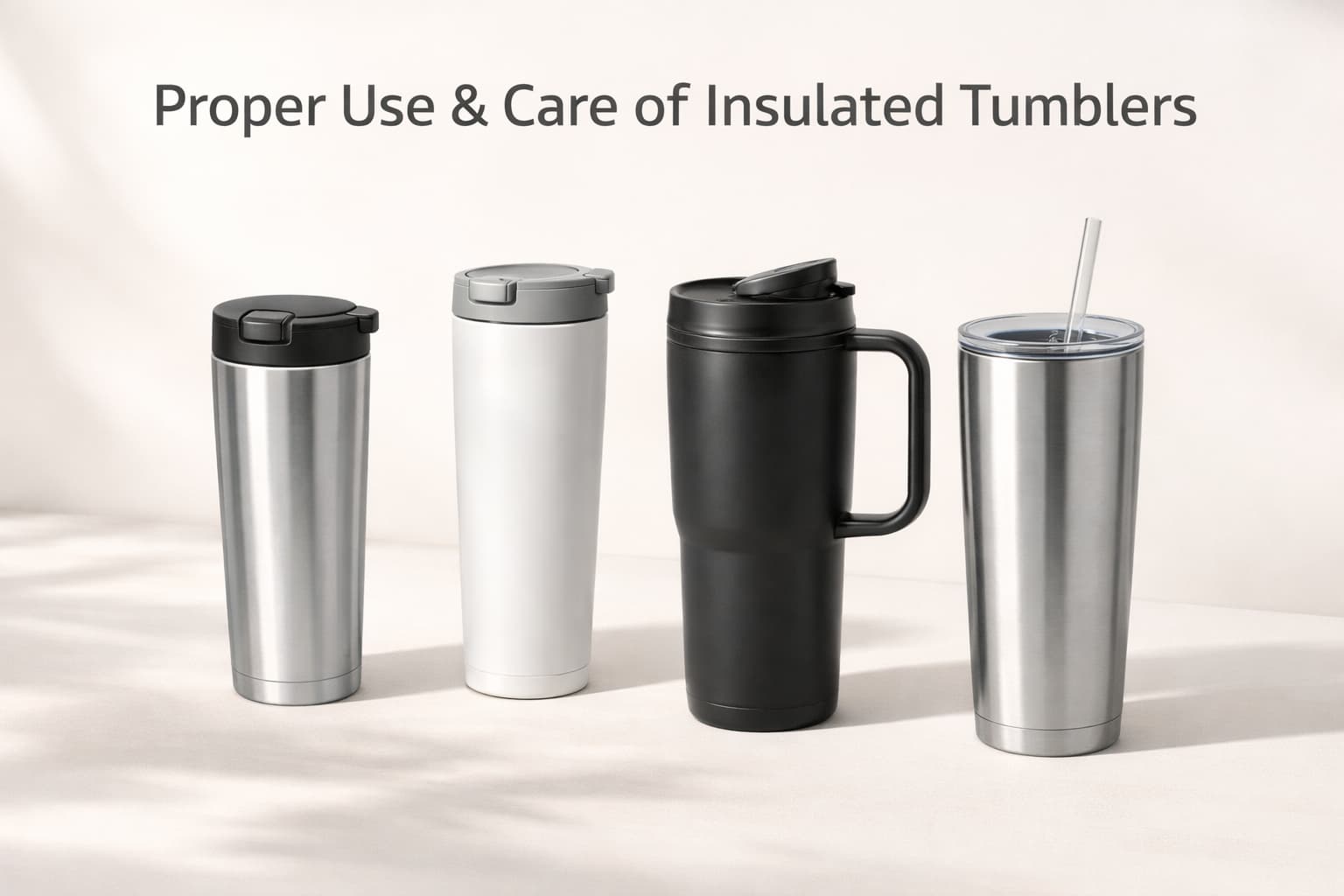
A stainless steel insulated tumbler is made for convenience. It helps keep drinks hot or cold for hours, supports daily commuting, and works well for office, travel, and retail use. But proper use matters. Not every drink is suitable for long-term storage in a sealed tumbler, and not every cleaning habit is safe.
As a stainless steel drinkware manufacturer, we often see the same avoidable mistakes: storing the wrong liquids for too long, shaking sealed hot drinks, or sealing the cup immediately after using cleaning agents. These habits may affect hygiene, flavour, product lifespan, and in some cases even safety.
This guide explains how to use a stainless steel insulated tumbler properly, what to avoid, and how to keep it clean and safe for daily use.
What You Should Not Put in an Insulated Tumbler
Not every beverage or ingredient is suitable for long-term storage in a stainless steel insulated tumbler. Some contents may spoil quickly, affect flavour, damage the interior over time, or create pressure inside a sealed cup.
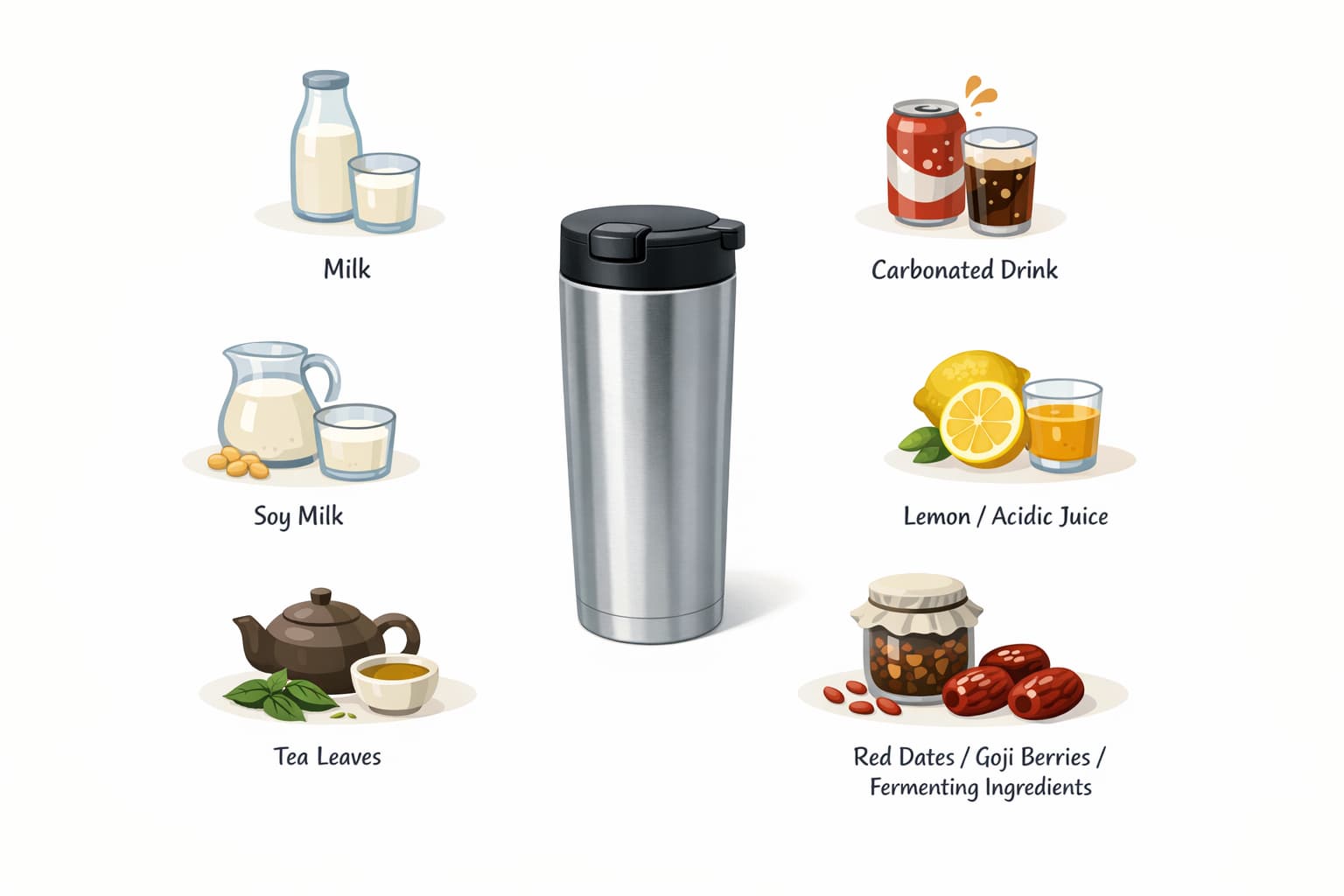
For everyday safe use, it is best to avoid storing the following contents in an insulated tumbler for extended periods:
- fermenting ingredients such as red dates, goji berries, snow fungus, or basil seeds
- carbonated drinks and strongly acidic beverages
- milk, soy milk, and other protein-rich drinks
- tea leaves or herbal decoctions steeped for too long
- hot liquids mixed with effervescent tablets or gas-releasing powders
- cleaning solutions or descaling agents left sealed inside the tumbler
The sections below explain why this content is not recommended and how to use your tumbler more safely.
Why Proper Use Matters
An insulated tumbler is designed to retain temperature in a sealed environment. That is exactly what makes it useful. But the same sealed structure can also create problems when the liquid inside changes over time, releases gas, reacts with ingredients, or is stored too long without proper cleaning.
Used correctly, a tumbler is practical and durable. Used incorrectly, it may lead to:
- unpleasant odors or flavor changes
- Rapid bacterial growth in protein-rich drinks
- pressure buildup inside the cup
- liquid spraying when the lid is opened
- damage to the interior surface over time
1. Do Not Store Fermenting Ingredients for a Long Time
Ingredients such as red dates, goji berries, snow fungus, basil seeds, or similar nutrient-rich materials should not be left in a sealed, insulated tumbler for long periods.
In a warm, enclosed environment, these ingredients may create favourable conditions for microbial activity. Over time, fermentation can begin, which may release gas inside the tumbler. Because the cup is sealed, the pressure has nowhere to go.
If pressure builds up and the lid is opened suddenly, hot liquid or ingredients may spray out quickly. This is one of the most important safety risks to avoid.
Better practice:
If you want to steep ingredients like these, consume them within a short time and avoid leaving them sealed for many hours, especially in a warm tumbler.
2. Do Not Keep Carbonated or Strongly Acidic Drinks Inside for Too Long
Carbonated drinks already contain dissolved gas. In a sealed, insulated tumbler, especially when temperature changes, internal pressure may increase. This can cause liquid to spill or spray when the lid is opened.
Strongly acidic drinks such as some fruit juices, vinegar-based drinks, or citrus-heavy mixtures are also not ideal for long-term storage. Even though stainless steel is durable, prolonged contact with acidic liquids is generally not recommended for daily insulated drinkware use.
Better practice:
Use your tumbler mainly for water, coffee, or ordinary daily beverages. If you carry juice or other acidic drinks, do not leave them inside for a long time, and clean the tumbler soon afterwards.
3. Do Not Store Milk or Soy Milk for Hours
Milk and soy milk are high in protein and highly sensitive to temperature and hygiene conditions. In a warm environment, bacteria can multiply quickly. Even if the tumbler keeps the drink warm, that does not mean it keeps it safe for extended storage.
After several hours, milk-based drinks may spoil, turn sour, or develop harmful bacterial growth. This can affect both taste and food safety.
Better practice:
If you carry milk, soy milk, or similar beverages, drink them as soon as possible. Do not treat an insulated tumbler as a long-term storage container for dairy or plant-protein drinks.
4. Do Not Use It to Steep Tea or Herbal Decoctions for Too Long
Many people use insulated tumblers to make tea, but long-term steeping is not ideal. Tea leaves are usually best brewed within a reasonable temperature range and drinking window. When tea sits in a hot sealed tumbler for too long, the flavour can become bitter and dull, and the drink may lose its balanced taste.
The same caution applies even more strongly to herbal decoctions or traditional herbal ingredients. These have more complex compositions, and long high-temperature storage in a sealed metal container is generally not recommended.
Better practice:
Brew tea properly, then drink it within a suitable time. For herbal preparations, use the right container and method rather than leaving them in an insulated tumbler for extended periods.
5. Do Not Shake a Sealed Tumbler Vigorously, Especially with Hot Water or Effervescent Tablets
This is a common but overlooked mistake. If you shake liquid in a tightly sealed tumbler, especially hot liquid, the pressure inside may increase. The risk becomes even higher if the drink contains ingredients that release gas, such as effervescent tablets, baking soda, or similar additives.
When the lid is opened after strong shaking, the pressure may release suddenly and cause hot liquid to burst outward. This can lead to burns or mess.
Better practice:
Do not shake a sealed tumbler violently. If you need to dissolve tablets or powders, use the cup carefully, allow gas to release, and avoid sealing it immediately.
6. Do Not Seal the Tumbler Immediately After Using Cleaner or Descaler
Some users clean tumbler interiors with citric acid, vinegar, or descaling agents. That can be acceptable when done correctly, but the tumbler should not be sealed and shaken immediately afterwards.
Cleaning agents and scale deposits may react and release gas. If the lid is tightened right away, pressure can build inside the cup. Shaking the tumbler at that stage increases the risk.
Better practice:
When deep cleaning with a descaler or acidic cleaner, keep the tumbler unsealed, allow the reaction to finish, rinse thoroughly, and dry before closing the lid again.
What Drinks Are Generally Suitable?
For most stainless steel insulated tumblers, these are usually the safest everyday options:
- warm water
- hot water
- plain tea for short-term drinking
- black coffee
- cold water
- iced drinks without gas
The best practice is simple: fill, drink, clean, and do not leave complicated beverages inside for too long.
How to Clean and Maintain an Insulated Tumbler Properly
Good maintenance is just as important as correct use.
Clean It Daily
Wash the tumbler after each use, especially if it held coffee, tea, juice, or flavored drinks.
Pay Attention to the Lid
The lid, seal ring, straw parts, and sliding components often trap residue more easily than the cup body. These areas need careful cleaning.
Do Not Leave Moisture Inside
After washing, let the tumbler dry fully before sealing it for storage. A damp sealed environment may lead to odour buildup.
Avoid Harsh Scrubbing Tools
Do not use steel wool or overly aggressive tools that may damage the surface.
Deep Clean When Needed
If the tumbler develops odour or scale, use a mild cleaner or food-safe descaling method, but do not seal the cup during the reaction stage.
A Few Simple Rules to Remember
If you want your insulated tumbler to stay safe, clean, and durable, remember these basics:
- Use it mainly for ordinary daily drinks
- Do not leave reactive or perishable contents inside for too long
- Do not shake sealed hot liquids
- clean the lid thoroughly
- Dry it before storing
- When in doubt, keep the usage simple
Final Thoughts
A stainless steel insulated tumbler is one of the most practical daily drinkware products, but it works best when used correctly. The biggest mistakes usually come from treating it like a universal storage container for every kind of drink or ingredient. In reality, sealed heat retention changes how liquids behave, how fast they spoil, and how pressure builds inside the cup.
Used properly, an insulated tumbler is safe, durable, and convenient. With a few simple precautions, you can improve hygiene, protect product performance, and avoid unnecessary risks in daily use.